What Does a Chimney Liner Actually Do?
The chimney liner is the interior passageway of your flue — the tube through which combustion gases, smoke, and heat travel from your fireplace or heating appliance up and out of your home. In most homes in Rosedale and Southeast Queens, the original liner is made of clay tiles that were installed when the home was built, typically decades ago.
The liner serves three critical functions: it contains the combustion byproducts (including carbon monoxide) so they exhaust safely to the outdoors; it protects the surrounding masonry from the intense heat of flue gases; and it provides the correctly sized passageway for your specific appliance to draft properly. When the liner is compromised, all three of these functions fail simultaneously — creating both a fire hazard and a carbon monoxide risk.
Why Older Homes in Rosedale Are at Higher Risk
Much of Rosedale's housing stock was built between the 1940s and 1970s. The clay tile liners in these homes are now 50 to 80 years old, and they have endured decades of thermal stress, moisture cycling, and the acidic byproducts of combustion. Clay tiles crack along their natural seams as the chimney shifts slightly over time and as temperature differentials cause repeated expansion and contraction.
In some cases, older homes in Queens were built without any liner at all — a practice that was common before modern building codes required them. If your home predates 1950 and has never had a chimney inspection with a camera scan, there is a real possibility that your chimney is operating without an adequate liner right now.
Adding to this risk, many homeowners in our area have upgraded from oil heating systems to gas appliances or installed new wood stoves or gas inserts. Each of these changes requires a liner that is properly sized for the new appliance — and using an old, oversized clay flue with a modern gas appliance is a code violation that creates dangerous draft problems.
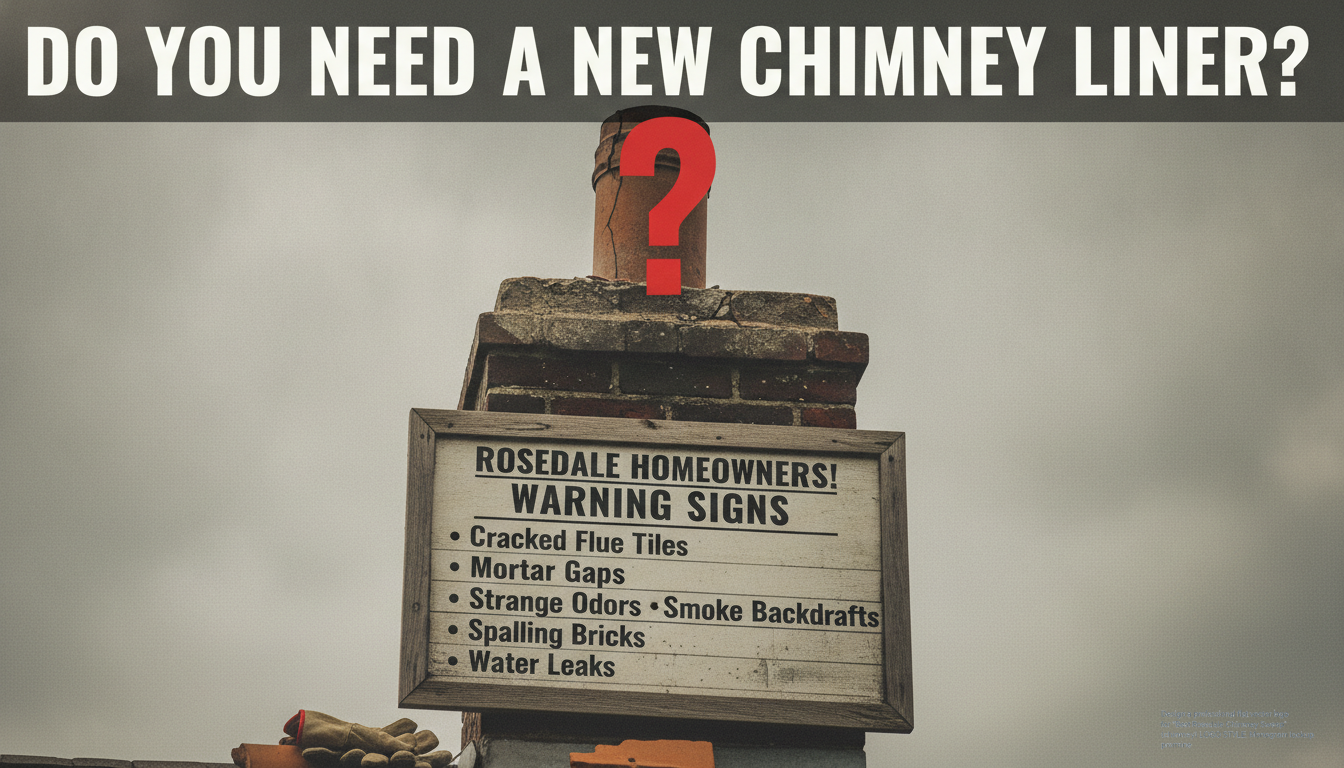
Seven Warning Signs Your Chimney Liner May Need Replacement
- White staining (efflorescence) on the exterior brick: This mineral deposit is left behind as water migrates through the masonry from inside the chimney — a sign that the liner is allowing moisture to escape into the surrounding structure.
- Visible cracks in the firebox walls: Large cracks in the firebox above the fire grate can indicate that the liner above has failed and heat is transferring into the masonry.
- A persistent smoky smell in the house: Even when no fire is burning, a cracked liner can allow flue gases to seep back into the home through gaps in the masonry.
- Shaling — pieces of clay tile in the firebox: If you find fragments of clay tile in the ash pile or on the smoke shelf, it means the liner is physically breaking apart.
- Carbon monoxide detector alarms: If your CO detector triggers when using your fireplace or furnace, a damaged liner could be allowing gases to re-enter the living space. This is a life-safety emergency — evacuate immediately and call for professional evaluation.
- Failed video inspection: A Level 2 chimney inspection with a camera scan is the definitive way to assess liner condition. Cracks, gaps, and missing sections that are invisible from the firebox are clearly documented on video.
- Recent appliance change: Installing a gas insert, wood stove, or pellet stove without relining the chimney to match the new appliance's specifications is both a safety hazard and a code violation in New York.
Your Chimney Liner Options: Flexible Stainless Steel vs. Rigid Stainless Steel
At Best Rosedale Chimney Sweep, we install UL-listed stainless steel liner systems — the current industry standard for chimney relining. Stainless steel liners are available in two primary configurations:
Flexible liner systems consist of corrugated stainless steel tubing that can navigate offsets and bends in older chimneys. Many homes in Rosedale and the surrounding Queens area have chimneys with slight offsets in the flue path — particularly in two-story colonials and split-level homes where the chimney changes direction behind the second-floor framing. A flexible liner is the correct solution for these configurations.
Rigid liner sections are used in straight, unobstructed flue paths and provide a smoother interior surface that promotes excellent draft and is easier to clean. For straight chimneys in single-story ranch homes, rigid liners are often the preferred choice.
In both cases, the liner is sized precisely to match your specific appliance's venting requirements. An oversized flue cools flue gases too quickly, causing condensation and accelerated creosote formation. An undersized flue restricts exhaust flow and creates backdrafting. Correct sizing is not optional — it is the foundation of a safe and efficient chimney system.
After installation, we perform a smoke test and final inspection to confirm the liner is properly sealed, correctly connected to the appliance, and performing as designed. Learn more about our complete Chimney Liner Installation & Repair service.
How Long Will a New Stainless Steel Liner Last?
A high-quality UL-listed stainless steel liner, when properly installed and maintained with annual inspections and cleaning, typically lasts 15 to 25 years or more. This compares favorably to clay tile liners, which can fail in as few as 20 to 30 years under heavy use — and which cannot be repaired once they crack, only replaced.
Protecting your new liner investment is straightforward: schedule an annual chimney sweep and cleaning to remove corrosive deposits, and have a Level 1 inspection performed at the same time each year to catch any early signs of wear before they become major problems.
Schedule a Liner Inspection for Your Rosedale Home Today
If your home is more than 30 years old, if you've recently changed heating appliances, or if you haven't had a video inspection of your flue in the past few years, now is the time to find out the true condition of your chimney liner. Best Rosedale Chimney Sweep serves homeowners throughout Rosedale and the surrounding Southeast Queens and Nassau County communities, including Laurelton, Springfield Gardens, Cambria Heights, St. Albans, Valley Stream, and Woodmere.
Call us at +1 (929) 955-1789 or email [email protected] to schedule a Level 2 inspection and liner assessment. We're open Monday through Sunday